Jean Hailes for Women’s Health
Health
Our work with The Victorian Department of Health.
Project overview
Avion collaborated with the Victorian Department of Health to deliver Australia’s first Inquiry into Women’s Pain – a landmark, high‑stakes report with the power to influence government policy, healthcare systems, and the broader public.
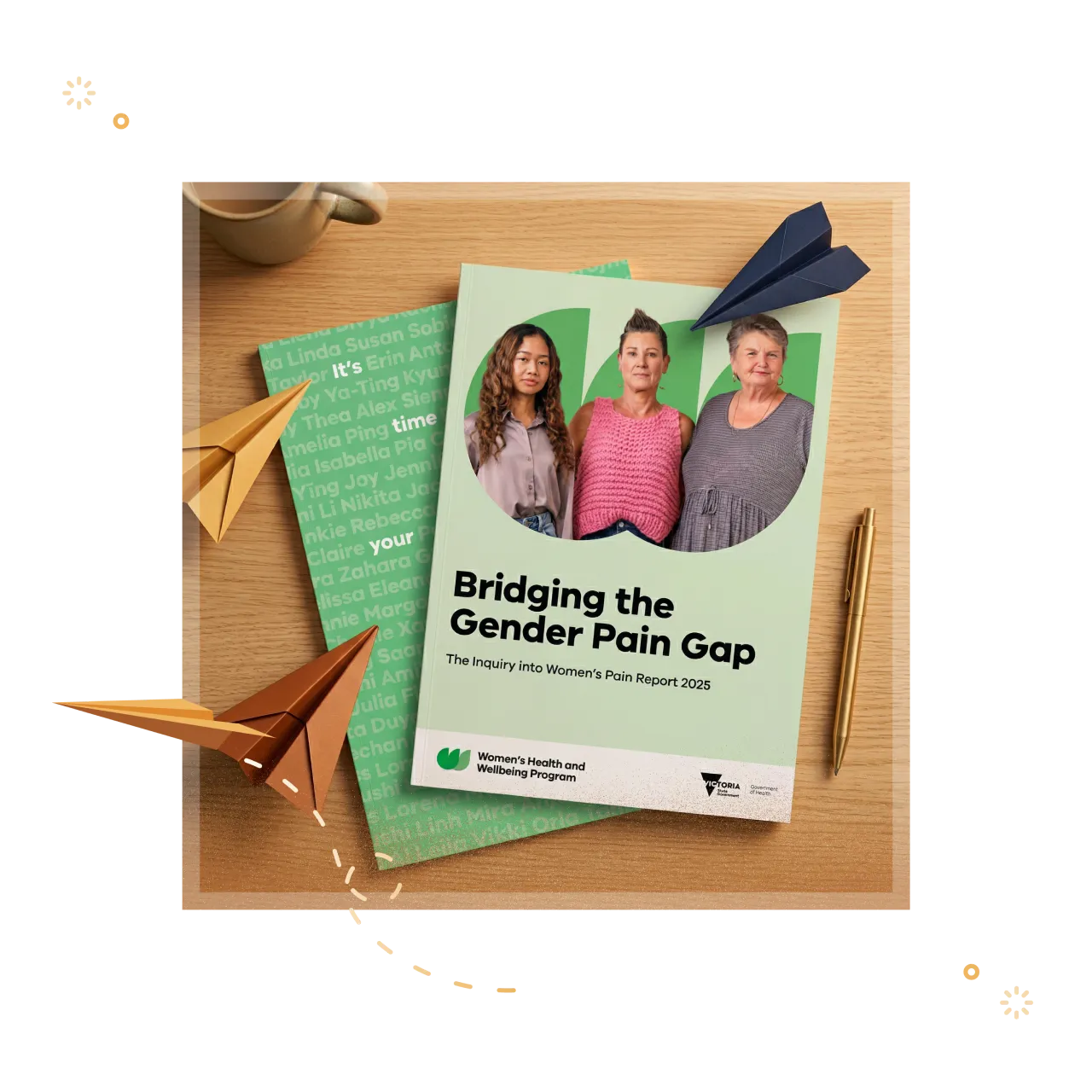

After engaging with more than 13,000 women, Safer Care Victoria (within the Victorian Department of Health) had important clinical research to share. While there was a 12,000-word draft, it was hard to read. Think: rigorous, evidence-heavy, and written primarily for policy and professional audiences.
For key messages to cut through with the public, Safer Care Victoria needed a copywriter with deep experience in regulated environments. They also had to know how to translate complex information into content people could trust.
The outcome was a fundamental transformation. Avion shaped clinical language into human-centred storytelling and dense data was made into plain English takeaways.
Our work was done under significant constraints. The report needed to meet strict AHPRA and government compliance requirements, navigate sensitive subject matter with care, and acknowledge women’s experiences without positioning healthcare professionals as the problem. And it needed to be completed within weeks to align with International Women’s Day.
We knew getting this right mattered; it wasn’t enough to simply review the research before putting pen to paper. We spoke directly with the people behind it, from survey designers to Inquiry leaders, to fully understand intent, nuance, and stakes. That depth of perspective allowed us to convey findings accurately while making the content readable for everyday audiences.
To do this, we followed a tried-and-tested content methodology we use at Avion for complicated work.
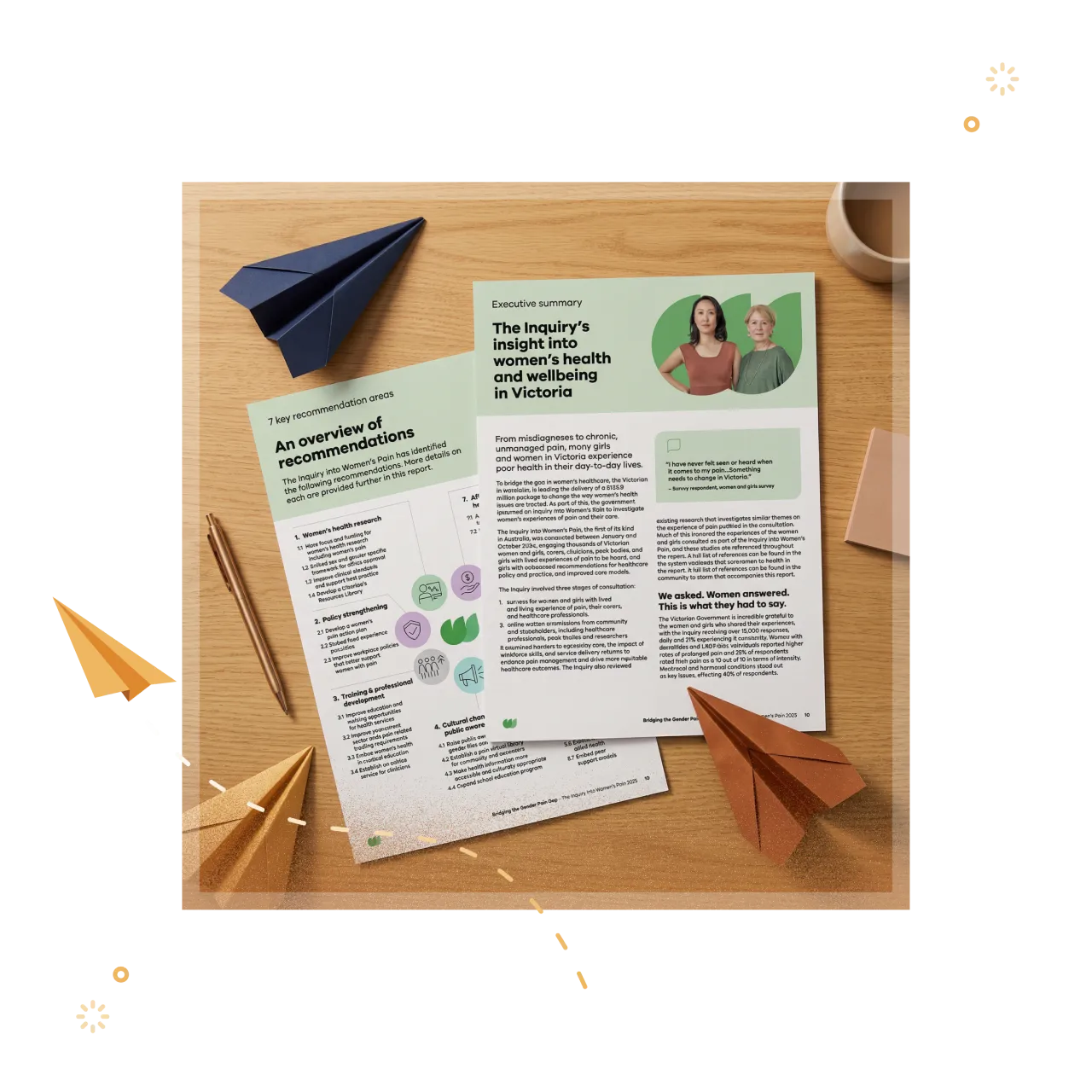
The focus of this stage was understanding what the data meant (emotionally, socially, and systemically) and recognising where women’s experiences had historically been minimised or misunderstood.
We began by immersing ourselves in the research. Our review included:
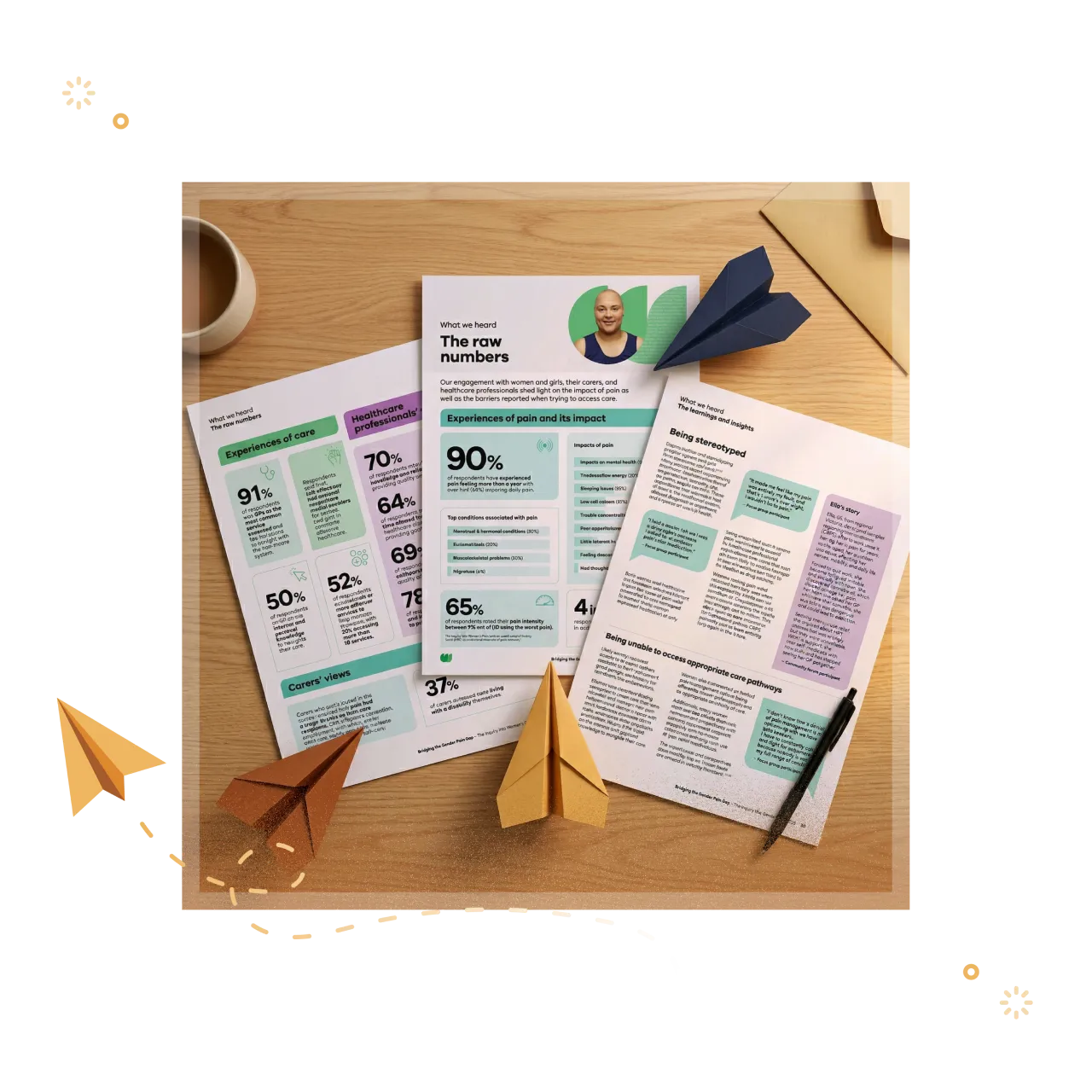
After conducting our review and speaking to stakeholders, we rebuilt the existing draft from the ground up. Working closely with the Inquiry team, we reshaped how the findings were told. We:

Once the narrative was agreed, our role shifted to writing, review, and release. Over several intensive weeks, we delivered the copy required for the report. Activities included:
In total, the report went through eight rounds of review, including design-stage amendments, to ensure it met the highest standards of care and accuracy. Throughout, compliant language was front of mind — balancing sensitivity, authority, and accountability without diluting meaning or impact.
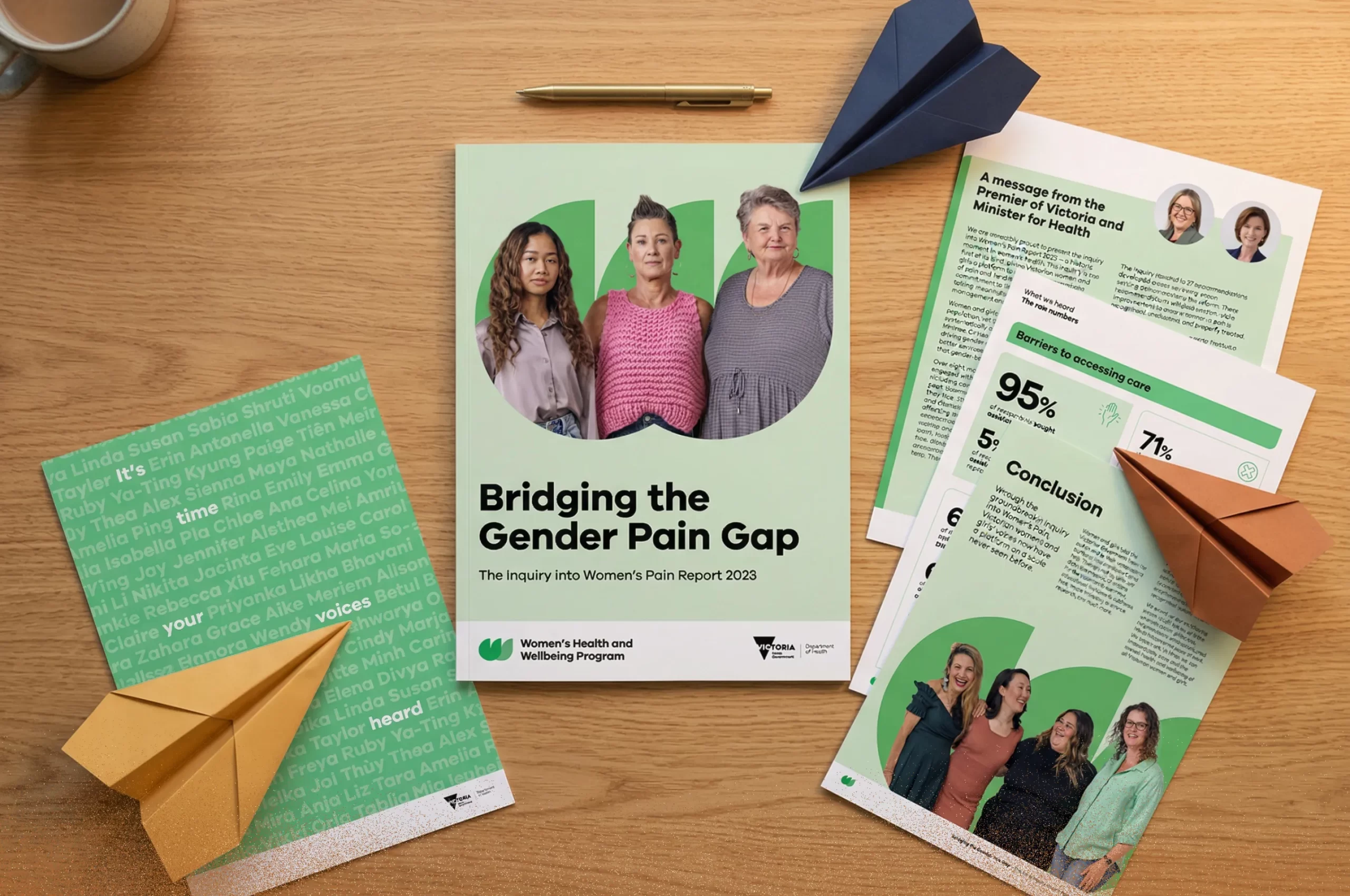
By combining rigorous analysis, strategic content design, and trauma-informed storytelling, we helped ensure the Inquiry didn’t just collect women’s voices but honoured them. This is the kind of work we care deeply about: supporting women’s health though access to information and stories that drive change.
The report received strong public and media reception, with coverage and amplification from respected organisations including RACGP, the Royal Women’s Hospital, and ABC News.
From full website migrations that bring purpose and vision to life to turning complex research into landmark national conversations, we help organisations transform complexity into clarity and impact.

Our hot takes, straight to your inbox
Subscribe and join hundreds of readers just like you.